On the day Apple's first foldable officially went on sale, a teardown livestream from Huaqiangbei repair blogger Yang Changshun pushed the iPhone Duo's most debated design decision into the spotlight.
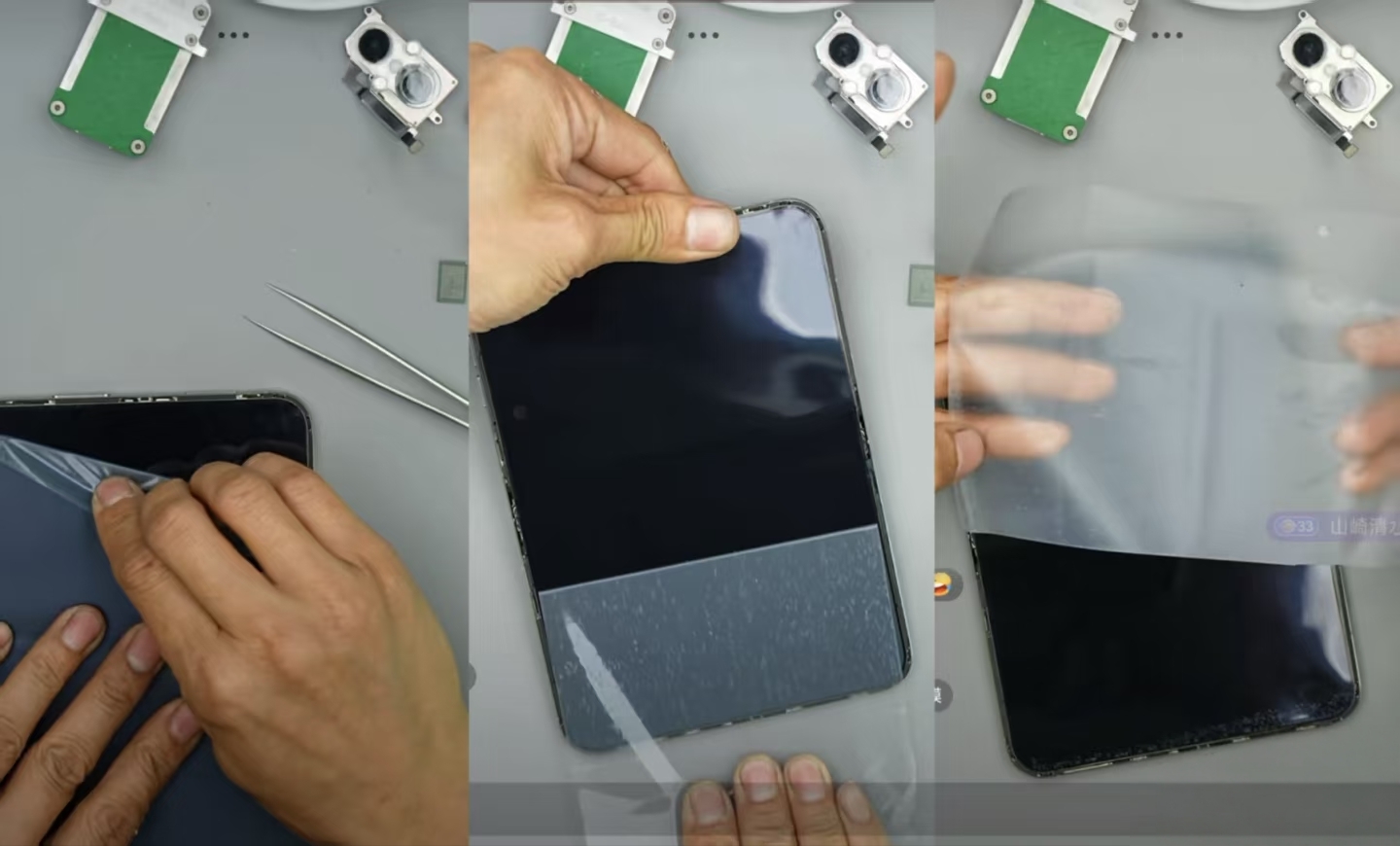
He did something Apple almost certainly didn't want broadcast widely: he peeled off the matte film on the inner display with his bare hands —no heat tools, no specialized equipment. Once the film lifted away, the screen shifted from a soft matte finish to a clear glossy surface. But the crease that the matte effect had been hiding immediately became obvious.
Apple's "Nano-Texture" Is, Fundamentally, a Peelable Film
Apple officially calls this layer the "nano-texture protective layer." It's made from a custom polymer that Apple says is 40% stiffer than standard industry materials. Combined with a scratch-resistant coating, it protects the flexible OLED panel, reduces glare through diffusion, and visually downplays the crease.
Yang's teardown shows something more concrete: the film can be removed by hand . Once it's gone, the crease looks no different from mainstream Chinese foldables—and at some angles, it's even more noticeable. Yang's verdict during the livestream was blunt: Apple spent three years on R&D, and what it produced was a sheet of film.
The Risk: ¥7,998
Anyone tempted to follow along should do the math first.
Apple's official repair pricing lists inner display damage at ¥7,998 , or ¥628 with AppleCare . If you just want the matte film reapplied, Apple charges ¥398 , or ¥139 with AppleCare . At least one blogger has reported screen leakage after peeling and reapplying the film.
In other words, the film is genuinely peelable—but peeling it wrong can cost close to the price of a mid-range phone.
Hinge and Structure: Yang's Assessment
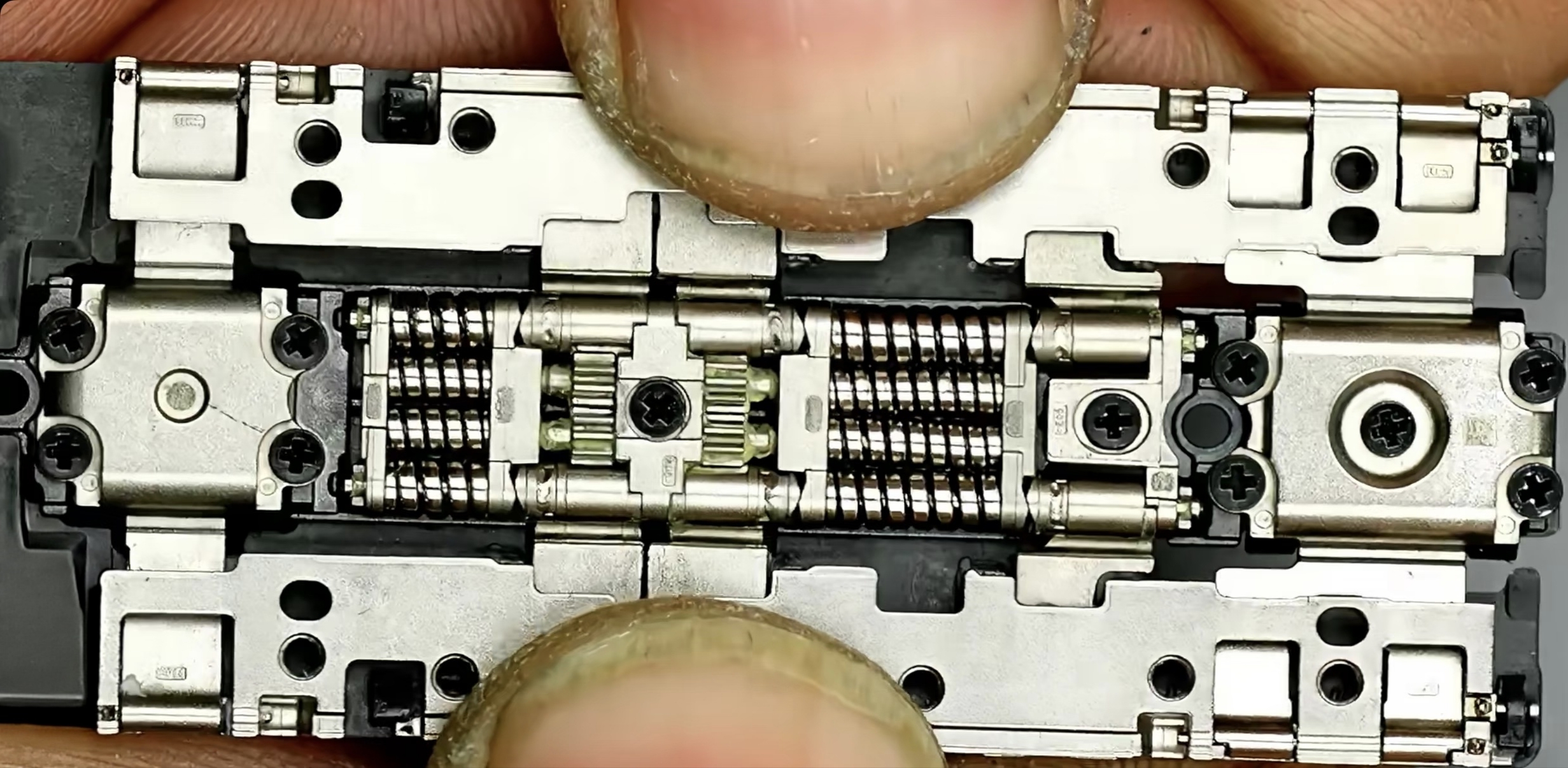
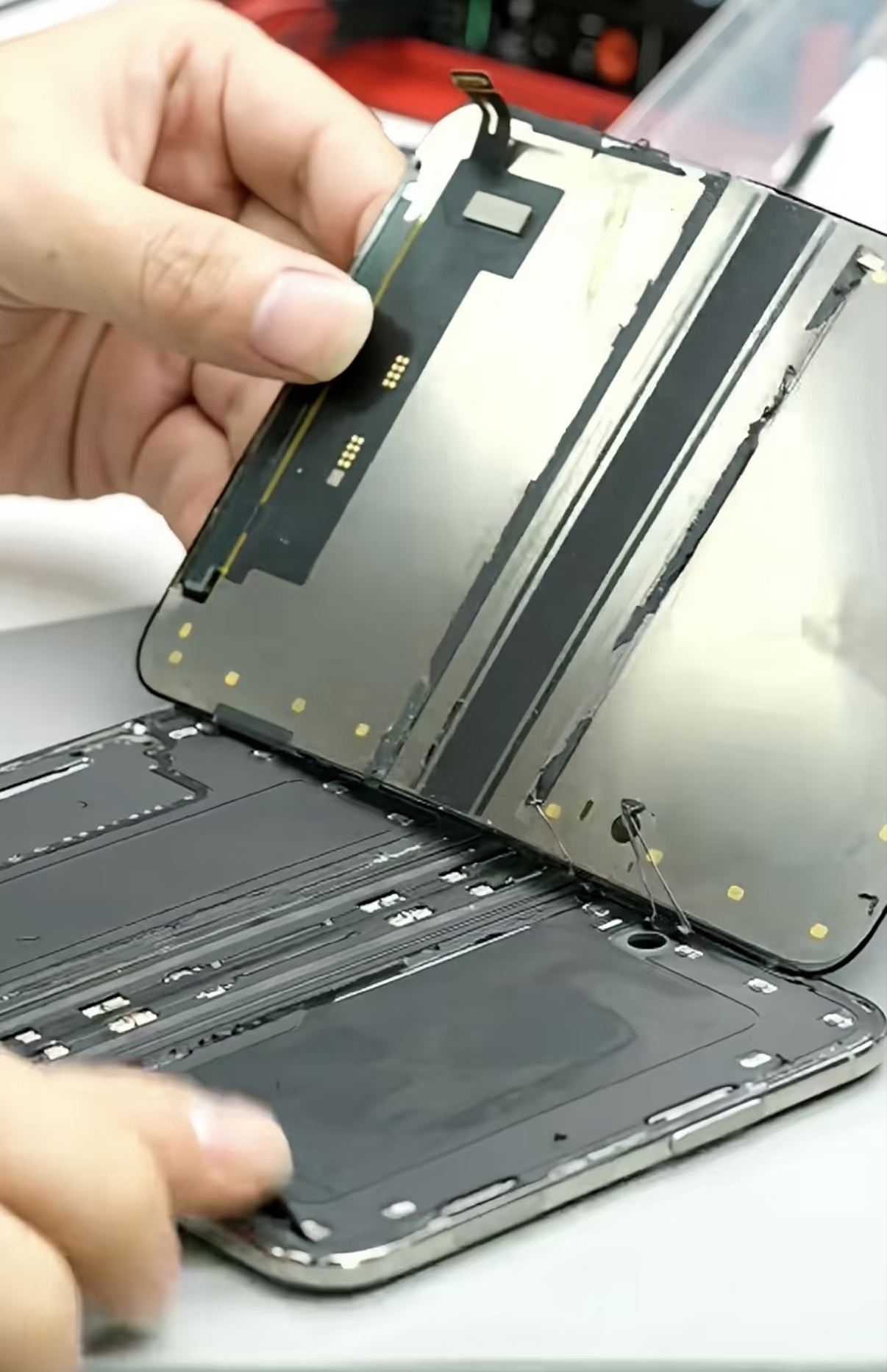
Beyond the film itself, Yang wasn't impressed by the iPhone Duo's overall folding structure. During the teardown, he said the hinge mechanism's technical barrier isn't particularly high and isn't meaningfully different from foldables already on the market—the folding approach is highly similar to Samsung's foldables. He did acknowledge that Apple's craftsmanship in display details, battery layout, and ribbon cable routing remains precise.
What This Means
Yang's teardown reveals a product-logic trade-off: Apple didn't physically eliminate the crease through hinge or display-layer engineering. Instead, it chose an optical film to soften the crease's visual presence. The film works—with it intact, the crease is nearly invisible head-on. But it also means the iPhone Duo's "crease control advantage" depends heavily on a consumable layer rather than a structural breakthrough.
For ordinary users, the conclusion is simple: don't peel it . With the film on, the crease is hidden. With the film off, the crease is still there—and your wallet may be several thousand yuan lighter.
Comments (0)
No comments yet. Be the first to comment!
Leave a comment
Comments are moderated. Your email is used only for verification and is never published.